When Should You Repair vs. Rebuild a Brick Wall?
How to Know If Your Brick Wall Needs Repair or Rebuilding
A brick wall can usually be repaired when the damage is limited to the mortar joints or a handful of cracked or spalling bricks, but it needs a full rebuild once the structure itself has shifted, bowed, or lost its footing. Knowing which situation you're dealing with before calling a mason saves you from either paying for a patch that won't hold or tearing out a wall that only needed a repair in the first place. The difference comes down to how deep the damage actually goes, not just how bad it looks from the sidewalk.
Signs a Brick Wall Can Be Repaired
Most brick wall problems start small and stay fixable if you catch them early. A repair, rather than a full rebuild, is usually enough when you're dealing with:
- Cracked or crumbling mortar between otherwise solid bricks
- A small number of chipped, spalled, or discolored bricks scattered across the wall
- Minor cracks that follow the mortar lines rather than cutting straight through the brick itself
- Efflorescence, the white, chalky mineral deposit that shows up on brick, without any structural movement behind it
- A wall that's still plumb and square, even if individual bricks or joints look worn
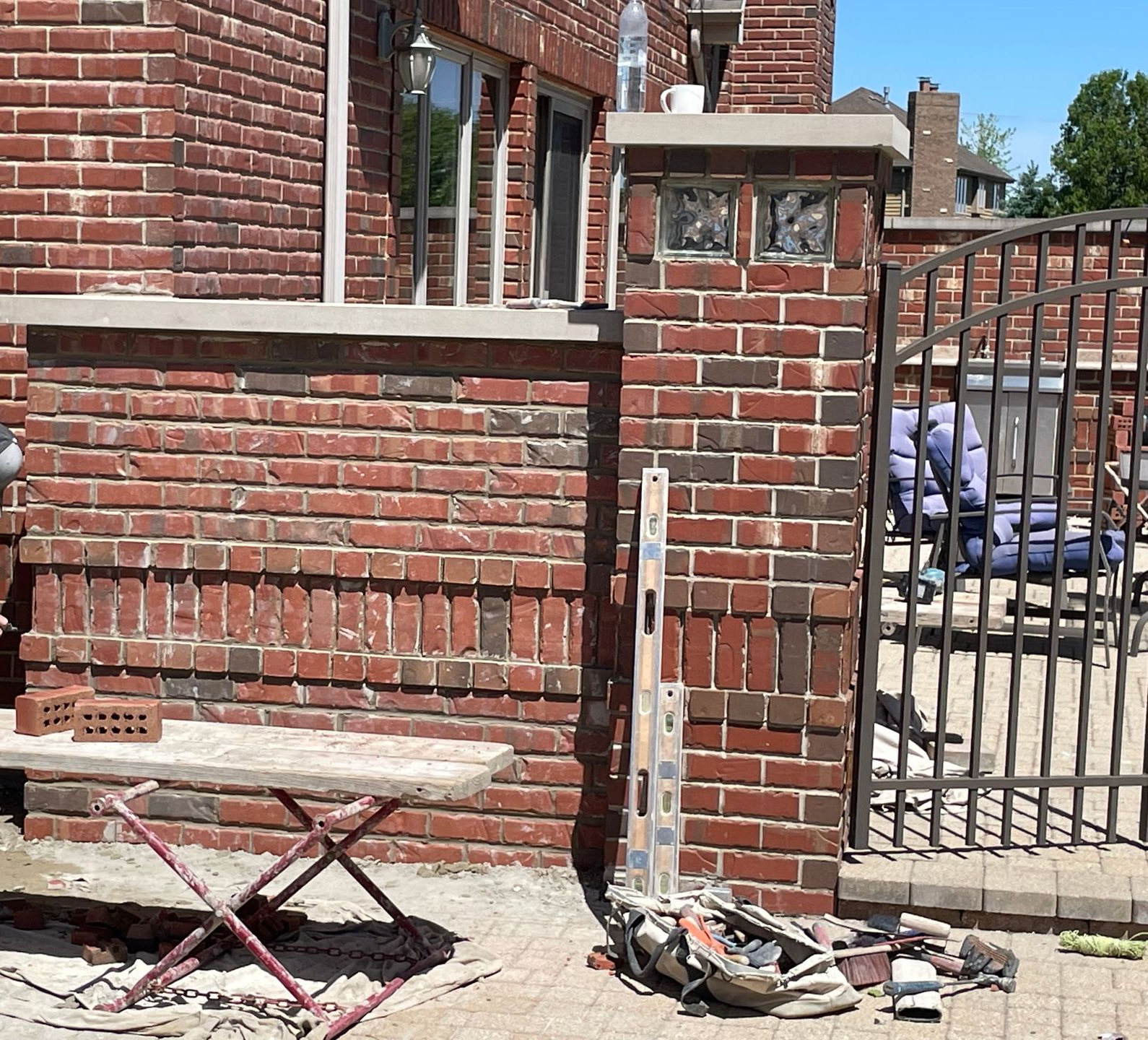
Tuckpointing and selective brick replacement handle all of these without touching the sound sections of the wall, which keeps the cost down and the original character of the brick intact.
Signs Your Brick Wall Needs a Full Rebuild
A wall crosses into rebuild territory once the problem is structural rather than cosmetic. These are the signs that a repair won't hold:
- Visible bowing, leaning, or bulging anywhere in the wall
- Cracks that run straight through the brick itself, not just the mortar joints, especially stair-step cracks that widen as they climb
- A foundation or footing that has settled or shifted underneath the wall
- Repeated repairs to the same section that keep failing again within a year or two
- Large sections of missing or severely deteriorated brick rather than isolated spots
When a wall has reached this point, patching individual sections is a short-term fix at best. The wall needs to come down to a sound footing and get rebuilt from the ground up, brick by brick, so the new structure doesn't inherit whatever caused the original failure.
Why a Quick DIY Patch Doesn't Solve It
A pre-mixed mortar patch from the hardware store looks like an easy fix, but it rarely holds up the way a proper repair does. Most patch products don't match the flexibility or composition of the original mortar, so they crack loose again within a season or two, especially once winter freeze-thaw cycles get involved. Worse, a DIY patch can trap moisture behind it instead of letting the wall breathe the way it was designed to, which speeds up the damage it was meant to stop. What looks like a quick weekend fix often ends up costing more in the long run, since a mason then has to remove the failed patch before doing the repair that should have happened the first time.
What Determines the Right Call
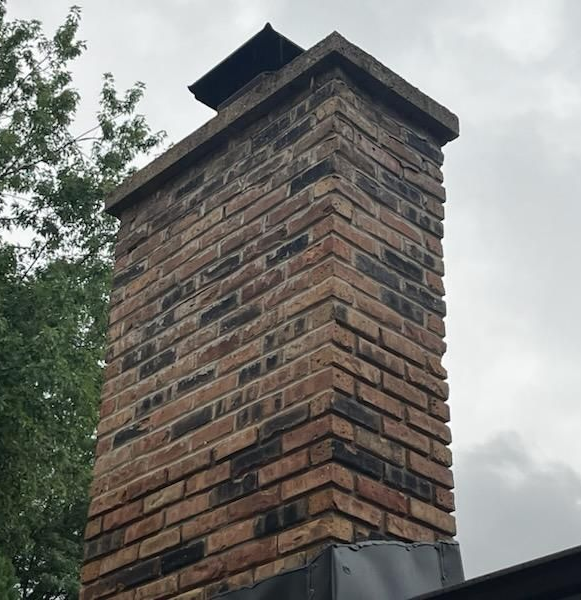
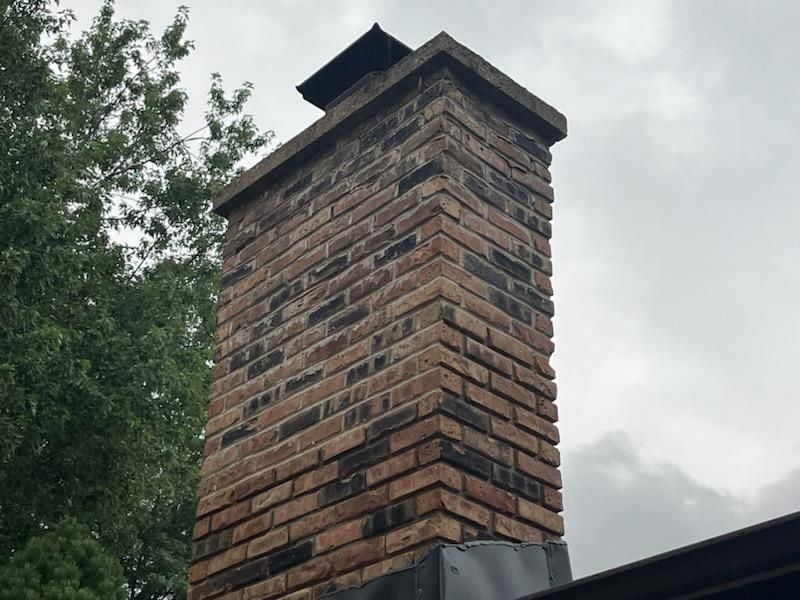
Age, extent of damage, and what's happening underneath the wall all factor into whether repair or rebuild makes more sense. Older walls built with a softer, historic mortar mix often repair well, since that mortar was designed to flex rather than crack outright under normal settling. A newer wall with hard modern mortar that's already cracked usually points to a bigger structural issue underneath rather than normal wear. Historic Chicagoland brick, in particular, tends to hold up differently than post-war construction, which is one more reason a blanket answer doesn't work without seeing the wall in person.
The amount of the wall affected matters just as much: once a repair would need to touch more than roughly a third of the wall's surface area, the cost starts to approach what a full rebuild would run, and at that point, a rebuild gets you a longer-lasting result for close to the same investment. Photos alone rarely settle the question either, since a hairline crack on the surface can be cosmetic or can be the visible edge of much deeper structural movement underneath. An on-site evaluation is really the only way to know which one you're actually looking at.
Why Waiting Makes the Decision Harder
A brick wall doesn't stay in the same condition while you decide what to do about it. Water finds its way into every crack that opens, and freeze-thaw cycles through the winter widen those cracks a little more each season. A wall that would have been a straightforward repair in the spring can need a full rebuild by the following winter if the underlying moisture problem never gets addressed.
This is especially true for older masonry across Chicagoland and Northwest Indiana, where many homes have already been through six or seven decades of Midwest winters before anyone notices the first crack. The same goes for a leaning or bowing wall: the longer it sits under its own weight without support, the more the lean progresses, and the more expensive the eventual fix becomes. Getting an evaluation as soon as you notice a problem, rather than after a season or two of watching it, is what keeps a repair a repair instead of letting it turn into a rebuild.
Brick Wall Repair & Rebuilding Services in the Northern Illinois, Indiana, and Southwest Michigan Area
Custom Brick & Stone provides brick wall repair and rebuilding services in the New Buffalo, MI, Saint John and Crown Point, IN, and New Lenox, IL, areas, backed by more than 20 years of masonry experience. A supervisor is on every job site from the first inspection through the final walkthrough, so you know exactly what you're getting before any work starts. Request a free estimate today and find out which option actually fits your wall.